Stop Collecting Condition Monitoring Data
Start Engineering Reliability
Most sites don't have a monitoring problem
They have an execution problem
We review, structure and integrate your reliability architecture so condition monitoring, regardless of provider, converts into measurable uptime improvement.
If This Feels Familiar
You're Not Alone
It's rarely about who is collecting the data
It's about how reliability decisions are structured and governed
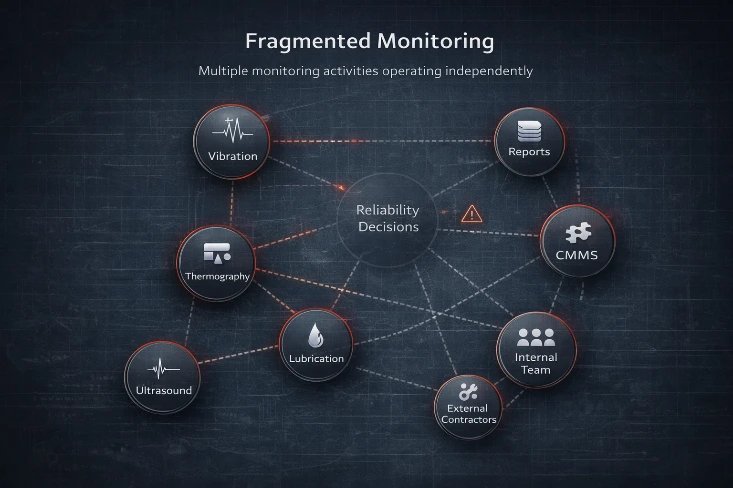
You're investing heavily in monitoring, but failures still occur
Reports are delivered, but escalation is inconsistent
Multiple vendors operate independently (communication silos)
Data lives in different systems
PM schedules feel bloated, yet untouchable
After incidents, the question becomes: "Why didn't we know?"
Most Providers Detect Faults
We Design Reliability Architecture

Traditional Model
Route-based monitoring
Technology-first
Static reports (PDF, email)
Vendor-specific
Reliability Solutions Australia
Audit-led architecture
Criticality-first
Findings structured into action
Provider-neutral governance
Condition monitoring providers focus on detection
We focus on ensuring detection converts into:
Clear decisions
Executed work
Measurable reliability improvement
You can continue working with your existing providers
You can work with us
What matters most, is that your reliability architecture is aligned, integrated and justified
FOCUS: Framework for Optimised Condition, Uptime & Sustainability
FOCUS governs how reliability decisions are made; independent of technology or vendor
It ensures:
- Monitoring is deployed only where justified
- Technologies align to failure modes
- Escalation pathways are clear
- Work orders reflect condition insights
- Improvement is measurable
Whether monitoring is delivered internally, externally, or by multiple providers; FOCUS creates structure around it.
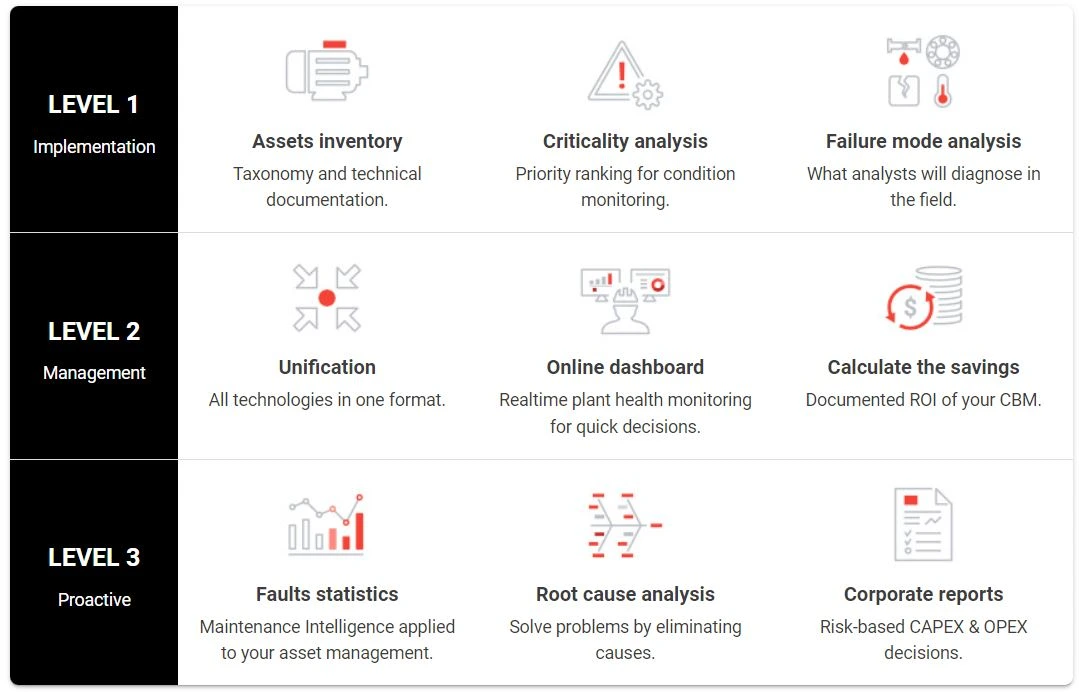
Our Three Operational Systems

- Asset criticality Review
- Monitoring Suitability Assessment
- PM rationalisation inputs
- Technology mix optimisation
- Provider alignment analysis
Designed to support your existing structure, not replace it.
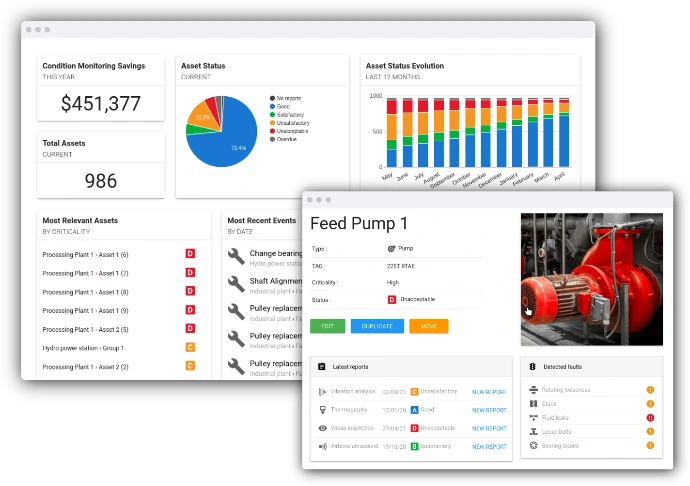
Your unified reliability intelligence layer.
- Integrates multi-technology data
- Aligns contractor reporting
- Centralises visibility
- Supports CMMS workflow
Compatible with your current vendors, or partner with Reliability Solutions Australia

When required, we deliver integrated condition monitoring using:
- Vibration analysis
- Thermography
- Ultrasound
- Vibration visualisation
- Condition-based lubrication
Improve plant operations.
Reduce unplanned downtime.
Strengthen escalation clarity.

You Don't Need More Vendors
You Need Structural Reliability Control
Start with the Predictive Maintenance Review to identify where reliability is leaking, and how to support your existing monitoring ecosystem more effectively.