You Had The Data.
Why Did It Still Fail?
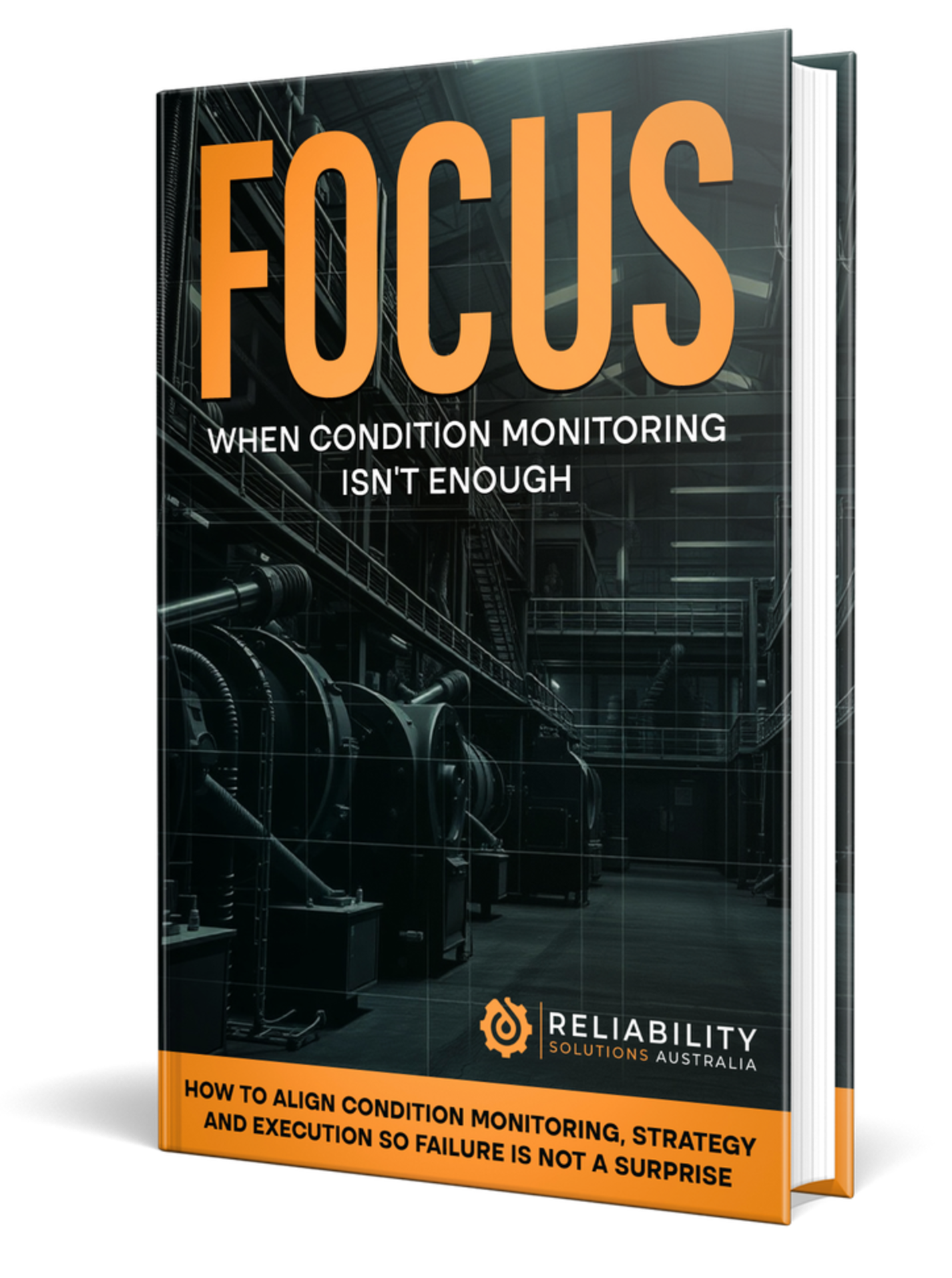
If your site already runs vibration, thermography and ultrasound, but failures still feel uncomfortably high, this e-book explores why
Most reliability programs don’t fail because they lack data
They fail because detection, escalation and execution are not structurally aligned
(FOCUS: Framework for Optimised Condition, Uptime and Sustainability)
ATTENTION MAINTENANCE MANAGERS & RELIABILITY LEADERS
Trusted across all industries
We are in good company.












Inside this E-book, You'll Discover
- Why "we had the data" is the most dangerous sentence in post-incident reviews
- The structural gap between detection and action, and why reports often never convert into executed work
- How multi-vendor environments quietly fragment reliability decisions (without anyone noticing)
- Why PM bloat and blanket monitoring can increase noise while reducing true control
- The hidden reason escalation stalls between reliability and maintenance
- What aligned reliability actually looks like when detection, CMMS workflows and accountability operate as one system
- How to evaluate whether your current monitoring architecture is improving reliability, or simply generating activity
Why Mature Monitoring Programs Still Leave Sites Exposed
1
Detection Without Escalation
Few have defined escalation logic that convert findings into accountable action.
Detection Without Escalation
Most sites detect faults.
Few have defined escalation logic that convert findings into accountable action.
2
Fragmented Technologies
No single asset health view.
Fragmented Technologies
Vibration. Thermography. Ultrasound.
Different vendors. Different reports. Different formats.
No single asset health view.
3
Reports That Don't Convert to Work
PDF findings emailed.
Insight without workflow equals risk.
Reports That Don't Convert to Work
PDF findings emailed.
Recommendations discussed.
Work orders delayed or deprioritised.
Insight without workflow equals risk.
4
Strategy Drift Over Time
RCM workshops happen.
Strategy Drift Over Time
RCM workshops happen.
Criticality matrices are built.
But execution slowly diverges from original intent.
5
More routes.
Monitoring Maturity ≠ Reliability Maturity
More routes.
More dashboards.
More data.
But exposure remains unchanged.
Get Immediate Access to This Exclusive Tool
Click the button below and receive our full PDF outlining:
- Why "monitoring maturity" doesn't equal "reliability maturity", and where the real gap sits (between detection → escalation → executed work)
- How fragmented multi-technology environments (vibration / ultrasound / thermography etc) creates blind stpots, and what "One Asset. One View. One Decision Pathway" actually looks like
- How to turn findings into action: converting reports into trackable work through CMMS discipline, accountability, and close-the-loop validation (so insights don't die in inboxes)
- A safer starting point: how to assess your current architecture before adding more monitoring, but checking fragmentation risk, escalation/workflow maturity, and your exposure before the next failure